
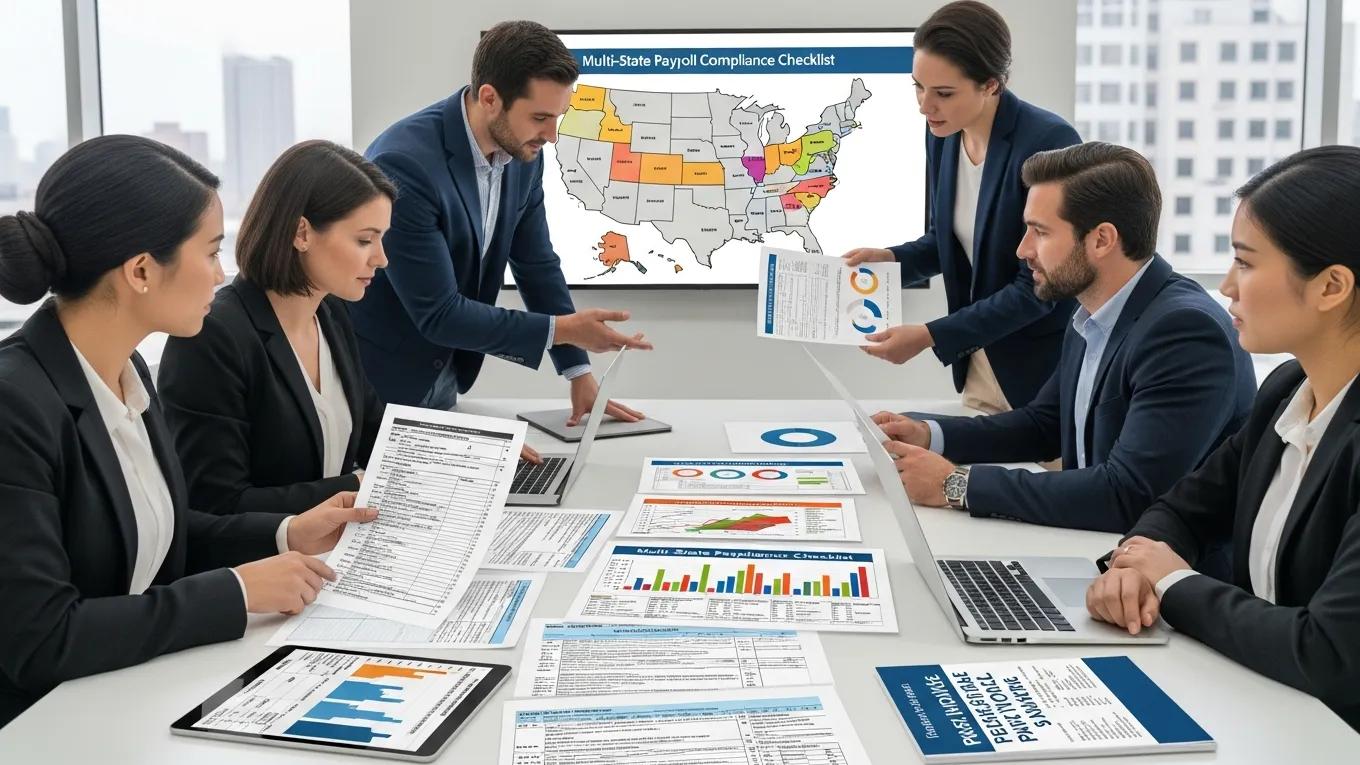
Multi-State Payroll Compliance: Comprehensive Employer Checklist and Guide for Tax Requirements
By Josh Henderson, Denali HR
Effective management of multi-state payroll compliance is essential for businesses operating across multiple jurisdictions. States impose distinct payroll tax requirements; failure to comply can result in penalties and operational disruption. This guide explains payroll tax obligations, the implications of payroll tax nexus, and the practical steps employers should take to achieve compliance. Addressing these areas reduces financial risk and ensures statutory obligations are met.
This article covers core payroll tax compliance elements: registration procedures, state unemployment insurance, and employee withholding. It also outlines how outsourced compliance solutions can support your operations, including the services Denali HR provides to simplify complex HR functions.
What Are Multi-State Payroll Tax Requirements and Why Do They Matter?
Multi-state payroll tax requirements are the tax obligations employers must meet when employees work in more than one state. These obligations commonly include income tax withholding, state unemployment insurance, and other payroll-related levies. Understanding each state’s rules is essential to avoid penalties and maintain legal compliance.
Non-compliance may lead to fines, back taxes, and reputational harm, and can increase scrutiny from tax authorities. Employers should maintain current knowledge of payroll tax rules in every state where they operate.
The differing state regulations create a complex compliance environment for employers.
Key Challenges in Multi-State Payroll Compliance & Tax Withholding
Managing payroll across multiple states requires navigating varied rules on tax withholding, unemployment insurance, wage laws, and reporting. These differences underscore the complex compliance challenges faced by non-profits.
Multi-State Payroll Compliance: Challenges for US Non-Profit Organizations, 2024
How Does Payroll Tax Nexus Affect Employer Obligations?
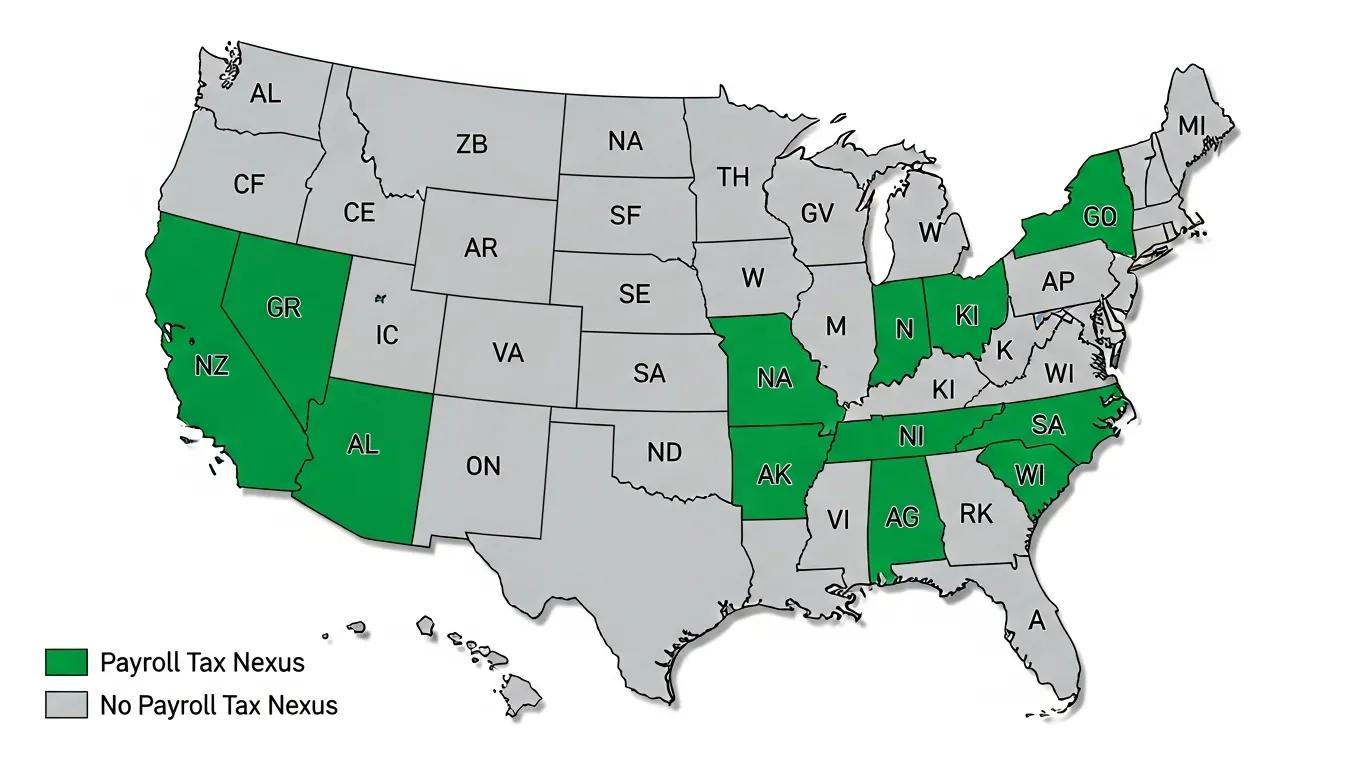
Payroll tax nexus determines whether a business has a tax obligation in a particular state. Nexus can arise from physical presence, employing workers, or meeting economic thresholds. Recognising how nexus affects employer obligations is fundamental to compliance.
Nexus reflects whether a business has a sufficient connection to a state to be subject to its tax laws.
Understanding State Tax Nexus for Multi-State Operations
The longstanding rule for state income tax nexus is that nexus is established if the corporation ‘avails itself of the substantial privilege of carrying on business in that state.’
Explanation of the Multistate Tax Commission’s Proposed Factor Presence Nexus Standard, 1980
- Physical Presence: If a business has a physical location, such as an office or warehouse, in a state, it creates nexus and requires the business to comply with that state’s payroll tax laws.
- Employee Presence: Employing workers who reside or work in a state typically establishes nexus, making the employer responsible for that state’s payroll taxes.
- Sales Thresholds: Some states have economic nexus laws, where a business may establish nexus based on sales volume or revenue generated in the state, even without a physical presence.
Applying these criteria enables employers to determine tax obligations and limit exposure to penalties.
Which States Require Payroll Tax Registration for Employers?
Employers must register for payroll taxes in any state where they have established nexus. Registration requirements vary by state; failure to register may result in significant penalties. Key points include:
- List of States: Employers should be aware of which states require registration based on their business activities and employee locations.
- Overview of Registration Processes: Each state has its own process for registration, which may include submitting specific forms and providing documentation.
- Consequences of Failing to Register: Not registering can result in fines, back taxes, and increased scrutiny from tax authorities.
Employers should periodically verify their registration status to maintain compliance with state laws.
How to Navigate State Payroll Tax Laws and Registration Processes
State payroll tax laws are complex; following clear steps simplifies compliance. Essential steps for employers include:
- Research State-Specific Requirements: Each state has unique payroll tax laws, so it’s crucial to research the specific requirements for each state where you have employees.
- Complete Registration Forms: Fill out the necessary registration forms for each state, ensuring that all information is accurate and complete.
- Maintain Documentation: Keep thorough records of all payroll tax filings and communications with state tax authorities to support compliance efforts.
Following these steps enables employers to manage state payroll tax obligations effectively.
What Are the Steps for State Payroll Tax Registration?
State payroll tax registration typically involves these steps:
- Identify Nexus: Determine in which states your business has established nexus based on employee locations and business activities.
- Gather Required Documentation: Collect necessary documents, such as business licenses and identification numbers, to support your registration.
- Submit Registration Forms: Complete and submit the required registration forms to the appropriate state tax authority, ensuring compliance with deadlines.
Completing these steps helps ensure your business is properly registered for payroll taxes in each relevant state.
How to Manage State Unemployment Insurance Compliance Effectively?
State unemployment insurance (SUI) compliance is a critical payroll obligation. Employers must understand SUI requirements in each state where they have employees and apply best practices to manage obligations.
- Stay Informed: Regularly review state-specific SUI requirements to ensure compliance with any changes in legislation.
- File Timely Reports: Submit SUI reports and payments on time to avoid penalties and interest charges.
- Maintain Accurate Records: Keep detailed records of employee wages and SUI contributions to support compliance efforts.
Implementing these practices helps employers manage SUI compliance and reduce regulatory risk.
What Are the Key Components of a Payroll Tax Compliance Checklist?
A payroll tax compliance checklist helps employers meet their obligations. Include these key components in your checklist:
Maintaining a comprehensive payroll tax compliance checklist keeps employers organized and compliant with their obligations.
How to Track Payroll Tax Reporting and Filing Deadlines Accurately?
Accurate tracking of reporting and filing deadlines is essential for compliance. Effective strategies include:
- Use Calendar Reminders: Set up calendar reminders for key reporting and filing deadlines to ensure timely submissions.
- Implement Payroll Software: Utilize payroll software that includes automated reminders and tracking features to streamline the process.
- Regularly Review Deadlines: Periodically review upcoming deadlines to ensure compliance with any changes in state regulations.
These strategies help employers track reporting requirements and meet filing deadlines consistently.
What Are Common Payroll Tax Penalties and How to Mitigate Risks?
Knowing common payroll tax penalties helps employers mitigate risk. Typical penalties and avoidance strategies include:
- Late Filing Penalties: Fines for failing to file payroll tax returns on time. To avoid this, ensure timely submissions and maintain accurate records.
- Underpayment Penalties: Charges for not paying the correct amount of payroll taxes owed. Employers should regularly review their tax calculations to ensure accuracy.
- Misclassification Penalties: Financial repercussions for incorrectly classifying employees as independent contractors. Properly classify workers to avoid these penalties.
Awareness of these penalties and implementation of preventive controls reduce the likelihood of non-compliance.
How to Manage Multi-State Employee Tax Withholding Correctly
Managing tax withholding across multiple states requires a clear understanding of each state’s rules. Key considerations include:
- State-Specific Withholding Rules: Each state has its own rules regarding tax withholding, so it’s essential to familiarize yourself with these regulations.
- Compliance Importance: Ensuring compliance with state withholding rules is crucial to avoid penalties and interest charges.
- Resources for Understanding Rules: Utilize state tax authority resources and consult with tax professionals to stay informed about withholding requirements.
Understanding these points supports correct multi-state withholding and reduces compliance risk.
What Are the Rules for Employee Withholding Across Different States?
Withholding rules differ by state, and employers must comply with those regulations. Important considerations include state tax rates, filing frequencies, and specific withholding requirements.
- State-Specific Requirements: Each state has unique withholding requirements, including tax rates and filing frequencies.
- Importance of Compliance: Non-compliance with withholding rules can result in penalties and increased scrutiny from tax authorities.
- Resources for Understanding Rules: Employers should consult state tax authority websites and seek professional advice to ensure compliance.
Staying informed about state-specific withholding rules enables employers to manage payroll tax obligations effectively.
How to Ensure Accurate Withholding for Remote and Multi-State Employees?
Remote work increases withholding complexity. Employers should adopt practical strategies to ensure accuracy across states.
- Understand State Requirements: Familiarize yourself with the withholding requirements for each state where your remote employees reside.
- Utilize Payroll Software: Implement payroll software that can automatically calculate withholding based on employee locations.
- Regularly Review Withholding Practices: Periodically review your withholding practices to ensure compliance with any changes in state laws.
Applying these strategies helps ensure accurate withholding for remote and multi-state employees.
How Can Outsourced Payroll Compliance Solutions Support Your Business?

Outsourcing payroll compliance offers measurable benefits for businesses managing multi-state requirements. Partnering with a specialised provider can reduce administrative burden, improve accuracy, and support ongoing regulatory adherence.
The complexity of multi-state compliance and associated penalties reinforces the value of specialist support.
Navigating Complex Multi-State Payroll Tax Compliance & Risks
When you have locations in multiple states, payroll taxes, workers’ compensation, ACA regulations, and other compliance issues become extremely complex. Failing to address every minute detail can result in massive fines or lawsuits. But compliance is a PEO’s specialty — their multi-state knowledge is invaluable. They ensure you meet all requirements, so you avoid penalties, audits, and legal exposure.
Multi-State Law Firm Considers PEO Partnership
- Expert Knowledge and Resources: Outsourced providers have in-depth knowledge of state-specific payroll tax laws and can help ensure compliance.
- Cost-Effectiveness: Outsourcing payroll compliance can reduce administrative burdens and associated costs for businesses.
- Ongoing Compliance Monitoring: Specialized providers offer continuous monitoring of compliance requirements, helping businesses stay up-to-date with changes in regulations.
Leveraging outsourced solutions streamlines payroll administration and reduces the risk of non-compliance.
What Are the Benefits of Partnering with a Specialized HR Service Provider?
Partnering with a specialized HR service provider delivers several benefits for businesses managing payroll compliance. Typical advantages are:
- Access to Expertise: HR service providers have extensive experience in payroll compliance and can offer valuable insights and guidance.
- Improved Efficiency: Outsourcing payroll functions can free up internal resources, allowing businesses to focus on core operations.
- Enhanced Compliance: Specialized providers stay informed about changes in payroll tax laws, helping businesses maintain compliance.
Partnering with a specialized HR provider enhances compliance controls and reduces exposure to penalties.
How Does Denali HR Streamline Multi-State Payroll Compliance?
Denali HR is a specialized outsourced HR service provider focused on simplifying complex HR functions for small to mid-sized businesses. They provide payroll support, compliance management, hiring and onboarding assistance, employee relations, and documentation services to help employers meet multi-state obligations.
Denali HR offers tailored solutions for payroll processing, tax compliance, and employee management. This allows businesses to concentrate on growth while maintaining adherence to state regulations, making Denali HR a practical partner for navigating multi-state payroll complexities.
Frequently Asked Questions
What are the consequences of failing to comply with multi-state payroll tax requirements?
Non-compliance can result in substantial financial penalties, including fines and back taxes, and may prompt audits by tax authorities. It can also damage a company’s reputation, hinder recruitment, and strain client relationships. Employers should stay informed and adhere to state payroll tax obligations.
How can businesses determine if they have established payroll tax nexus in a state?
Businesses determine payroll tax nexus by assessing factors such as physical presence, employee locations, and economic thresholds. A physical office, warehouse, or employees in a state typically establish nexus; many states also apply economic nexus based on sales or revenue. Consulting tax professionals provides certainty for nexus determinations.
What resources are available for employers to stay updated on state payroll tax changes?
Employers can rely on state tax authority websites, industry associations, and professional tax consultants to stay current. Subscribing to agency newsletters and bulletins, joining professional networks, and following payroll compliance publications also provide timely regulatory updates.
How can payroll software assist in managing multi-state payroll compliance?
Payroll software automates withholding calculations, tracks filing deadlines, and generates required reports for each state. Many systems update tax tables automatically and include features for tracking employee classification and producing compliance reports, which reduces manual error and administrative effort.
What steps should employers take if they discover a payroll tax compliance issue?
Employers should act promptly: review payroll records to assess the issue, consult a tax adviser or legal counsel, and, if necessary, contact state tax authorities to disclose and correct errors. Timely remediation can limit penalties and legal exposure.
What role do HR service providers play in ensuring payroll compliance?
HR service providers bring expertise in state-specific tax laws, assist with payroll processing and tax filings, and advise on employee classification. They provide ongoing compliance monitoring and updates, enabling companies to focus on core operations while maintaining regulatory compliance.
Multi-State Payroll Compliance: Essential Employer Tax Checklist
This article was reviewed by Josh Henderson, Founder of Denali HR. Denali HR, based in Salt Lake City, Utah, provides payroll services, employee benefits administration, HR support, and risk management solutions for small and mid-sized businesses. Founded in 2019, the company focuses on delivering personalized HR support without the complexity of large PEO providers.