

Optimizing Payroll Administration for Compliance and Efficiency
By Josh Henderson, Denali HR
Effective payroll administration is a foundational function for organizations of every size. It ensures employees are paid accurately and on schedule while meeting statutory requirements. This guide explains core payroll components, compliance obligations, and the operational advantages of outsourcing. It outlines payroll services, compliance practices, automation benefits, and criteria for choosing an outsourced payroll partner so businesses can reduce risk and improve payroll efficiency.
What Are the Essential Payroll Processing Services for Businesses?
Payroll processing services cover the tasks required to calculate pay, withhold applicable taxes, and manage benefits administration. These services ensure legal compliance and reliable compensation delivery.
Outsourcing payroll can reduce administrative workload and improve accuracy. By engaging specialized providers, organizations can concentrate on core activities while ensuring payroll is executed in line with regulatory requirements.
Understanding Payroll Processing and Its Impact on Employee Management
Payroll processing directly affects employee satisfaction and retention. Reliable, timely pay builds trust and supports workforce stability. Accurate payroll also reduces the likelihood of legal disputes arising from payroll errors.
Payroll data also supports HR functions such as performance analysis and workforce planning. When payroll and HR systems are integrated, organizations gain clearer insights to inform staffing and compensation decisions.
How Outsourced Payroll Solutions Enhance Accuracy and Efficiency

Outsourced payroll providers apply targeted expertise and technology to reduce errors and accelerate processing. This approach supports tax compliance, lowers the internal administrative burden, and improves operational consistency.
Preparing for the operational changes that accompany outsourcing is essential to optimize tax compliance activities.
Optimizing Tax Compliance Through Outsourcing
If you are considering outsourcing, it is critical to prepare for the changes needed to optimize your tax compliance activities, including US corporate income tax.
Best Practices in Tax Compliance Outsourcing, 2017
Denali HR provides payroll support services that include payroll processing, tax compliance management, and employee documentation. Partnering with Denali HR enables businesses to access scalable workforce management solutions tailored to their needs.
How Can Businesses Ensure Payroll Tax Compliance Effectively?
Maintaining payroll tax compliance requires clarity on tax obligations and adherence to filing deadlines to avoid penalties and legal exposure.
Modern payroll software helps manage compliance by delivering updates and guidance on changing tax regulations. Complementing software with targeted training for payroll staff further strengthens compliance controls.
Key Payroll Tax Obligations and Compliance Deadlines
Understanding payroll tax obligations is necessary to remain compliant. Key obligations include:
- Federal Income Tax Withholding: Employers must withhold federal income tax from employee wages based on IRS guidelines.
- Social Security and Medicare Taxes: Employers are required to match employee contributions to Social Security and Medicare.
- State and Local Taxes: Compliance with state and local tax regulations is crucial, as these can vary significantly.
The preceding table reinforces the need to track each payroll tax obligation and its filing schedule to maintain compliance and avoid penalties.
Practical Payroll Compliance Checklists and Risk Reduction Strategies
Using compliance checklists helps identify and reduce payroll risks. Recommended strategies include:
- Regular Audits: Conducting regular audits of payroll processes can identify discrepancies and ensure compliance.
- Documentation Management: Maintaining accurate employee records and documentation is essential for compliance and risk management.
- Training Programs: Providing ongoing training for payroll staff can enhance their understanding of compliance requirements and best practices.
These measures support regulatory adherence and contribute to more efficient payroll operations.
What Are the Benefits of Payroll System Automation in Compliance?
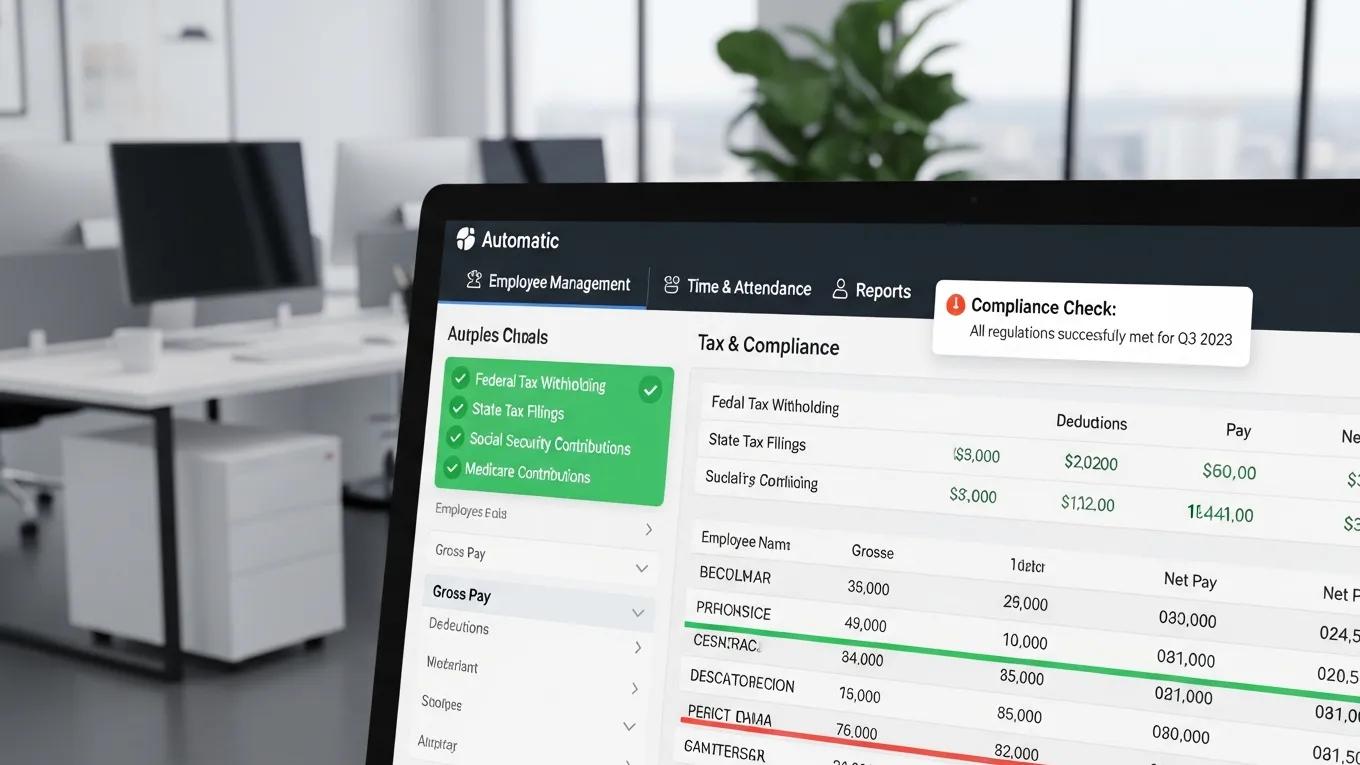
Automated payroll systems reduce manual error, speed tax filing and reporting, and strengthen data protections. Automation enhances accuracy and frees staff to focus on strategic HR and finance tasks.
A robust payroll system automates processes from salary calculation to tax deductions, improving accuracy and operational reliability.
Automated Payroll Systems for Efficient Compensation & Compliance
A payroll system automates employee salary calculation and payment management to address the limitations of manual payroll methods, which can be time-consuming and error-prone. A computerized payroll system is designed to manage employee information, attendance tracking, salary calculation, tax deductions, allowances, and payslip generation. Such systems maintain a centralized database of employee details, salary structures, and payment history to ensure data integrity and facilitate information retrieval. By automating gross salary calculations, deductions, and net pay, the system reduces human error and administrative workload.
EVALUATING PAYROLL SYSTEMS FOR EFFECTIVE EMPLOYEE COMPENSATION AND ORGANIZATIONAL COMPLIANCE, 2026
Integrating payroll software helps ensure accurate, timely tax filings and improves tracking of employee information for compliance with labor regulations.
Integrating Payroll Software for Streamlined Tax Filing and Reporting
Integrated payroll software automates generation of required tax forms and reports, reducing administrative effort and the risk of filing errors. This improves efficiency and regulatory accuracy.
Enhancing Data Security and Scalability Through Automation
Payroll data requires strong security controls. Automated systems typically include advanced security features to protect sensitive information and offer scalable capacity to accommodate workforce growth without compromising compliance.
Digital technologies have transformed payroll management by enabling automation, enhancing data security, and supporting integration with HR systems.
Digital Payroll: Automation, Security & HR Integration
Digital technologies have changed payroll management by introducing automation and cloud-based payroll capabilities that reduce human error, improve data security, provide real-time access to information, and enable integration with human resources (HR) and enterprise resource planning (ERP) systems without disruption.
A Survey of Adoption Challenges and Barriers in Implementing Digital Payroll Management Systems in Across Organizations, RR Kothamaram, 2021
How to Choose the Right Outsourced Payroll Partner for Your Business?
Selecting an outsourced payroll partner is a strategic decision that affects compliance and operational support. Evaluate potential partners against clear business requirements.
- Experience and Expertise: Look for providers with a proven track record in payroll administration and compliance.
- Technology Integration: Ensure that the provider’s systems can integrate seamlessly with your existing HR and payroll systems.
- Support Services: Evaluate the level of support offered, including training and ongoing assistance.
Evaluating Payroll Outsourcing Services for Compliance and Support
When assessing outsourcing providers, examine their compliance credentials, processes for monitoring regulatory change, and the client support model they provide to maintain compliance on your behalf.
Case Studies Demonstrating Compliance Improvements with Denali HR
Denali HR has supported multiple organizations in strengthening payroll compliance through tailored solutions. Case studies illustrate measurable improvements in payroll accuracy and processing efficiency.
What Are Best Practices for Employee Payroll Management and Documentation?
Accurate payroll records and clear documentation are essential for compliance. Best practices include regular record updates, secure storage, and well-defined payroll policies.
- Regular Updates: Keeping employee records up to date ensures compliance with labor laws and tax regulations.
- Secure Storage: Implementing secure storage solutions for payroll documentation protects sensitive information.
- Clear Policies: Establishing clear payroll policies helps ensure consistency and compliance across the organization.
Maintaining Accurate Employee Payroll Records and Documentation
Implement systems that enable prompt updates and controlled access to employee records so information remains current and verifiable for audits and reporting.
Aligning Payroll Administration with HR Compliance Requirements
Standardize payroll processes and formalize HR policies to ensure payroll practices align with broader compliance and organizational objectives.
Frequently Asked Questions
What are the common challenges businesses face in payroll compliance?
Common challenges include keeping pace with changing tax laws, managing diverse state and local regulations, and ensuring correct employee classifications. Payroll errors and inadequate documentation can trigger penalties and audit exposure. To address these issues, organizations should invest in staff training and reliable payroll systems that provide regular compliance updates.
How can businesses effectively train their payroll staff?
Effective training combines structured programs, workshops, and access to current regulatory resources. Mentoring by experienced staff and encouraging professional certifications in payroll management strengthen capability. Regular process reviews reinforce best practices and maintain compliance awareness.
What role does technology play in payroll compliance?
Technology automates calculations, generates required reports, and delivers timely regulatory updates, reducing human error. Secure payroll platforms facilitate recordkeeping and integration with HR systems, improving oversight of compliance metrics.
How can regular audits improve payroll compliance?
Regular audits identify errors and process weaknesses. Audits verify payroll calculations, tax withholdings, and employee classifications, and they ensure documentation is complete. Implementing audit findings reduces compliance risk and improves operational accuracy.
What should businesses consider when selecting a payroll software solution?
Select software that is user-friendly, scalable, and capable of integrating with existing HR systems. Assess compliance features such as automatic tax updates, reporting capabilities, and the vendor’s customer support and training resources. Review user feedback and case studies to confirm the solution meets your payroll requirements.
How can businesses ensure data security in payroll processing?
Protect payroll data with encryption, strict access controls, and routine security audits. Consider cloud-based payroll systems that implement enterprise-grade security protocols. Train staff on data protection practices and establish clear policies for handling sensitive information to reduce the risk of breaches.
About the Author
This article was reviewed by Josh Henderson, Founder of Denali HR. Denali HR, based in Salt Lake City, Utah, provides payroll services, employee benefits administration, HR support, and risk management solutions for small and mid-sized businesses. Founded in 2019, the company focuses on delivering personalized HR support without the complexity of large PEO providers.