

Ensuring Payroll Compliance: Managing Wage Garnishments & Deductions
By Josh Henderson, Denali HR
Managing wage garnishments and deductions is an essential element of payroll compliance that employers must address with care. A wage garnishment is a court-directed withholding of an employee’s earnings to satisfy a debt. The process is governed by a combination of federal and state statutes that prescribe procedures, limits and documentation. Employers must understand these obligations to limit legal exposure and maintain compliant payroll operations. This article summarizes the regulatory requirements, employer responsibilities, recommended practices for processing garnishments, and the typical payroll workflow. It also outlines ways Denali HR can support organisations in handling these obligations efficiently.
Recent evidence demonstrates both the frequency of wage garnishments and their measurable financial impact on employees, reinforcing the need for disciplined management.
US Wage Garnishment Trends & Impact on Workers
Wage garnishment permits creditors to collect payments directly from workers’ paychecks for defaulted debts. Analysis of administrative payroll records from a large processor—covering roughly 20 percent of US private-sector workers—shows new evidence for the period 2014 to 2019. By 2019, more than one in every 100 workers experienced a garnishment for delinquent debt. On average, a worker subject to garnishment remains under deduction for five months, during which approximately 11 percent of gross earnings is remitted to creditors.
Wage garnishment in the United States: New facts from administrative payroll records, AA DeFusco, 2014
Payroll Compliance Requirements
Payroll compliance for wage garnishments requires adherence to both federal and state statutes, precise record-keeping and timely reporting. Key obligations include:
- Adherence to Federal and State Laws: Employers must comply with the Consumer Credit Protection Act (CCPA) and any applicable state statutes governing garnishments.
- Accurate Record-Keeping: Maintaining detailed records of garnishments, including amounts withheld and the legal basis, is necessary for audit readiness.
- Timely Reporting: Employers must report garnishments to the relevant authorities within prescribed timeframes to avoid penalties.
Clear understanding and consistent application of these requirements help employers manage garnishments correctly and reduce the risk of regulatory or financial consequences.
Employer Responsibilities

Employers carry distinct responsibilities when processing wage garnishments. These responsibilities include the following items:
- Correct Classification of Employees: Employers must ensure that employees subject to garnishments are correctly classified to avoid misapplication of deductions.
- Communication with Employees: Employers should inform affected staff about the garnishment process and the specific amounts to be withheld.
- Compliance Monitoring: Regular reviews of garnishment procedures and applicable law are required to mitigate compliance risk.
By meeting these obligations, employers maintain regulatory compliance and promote transparency with their workforce.
Best Practices for Handling Garnishments
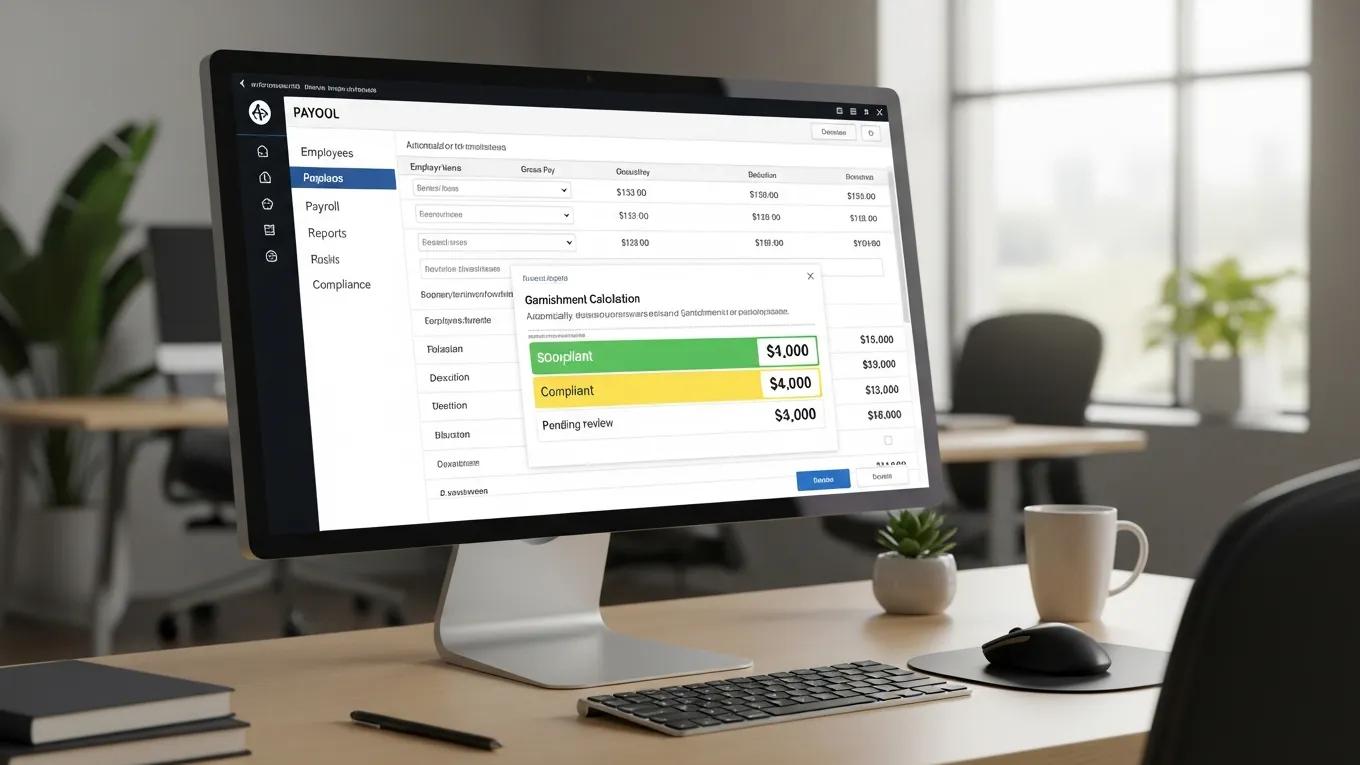
Employers should implement standardised practices to simplify garnishment administration and ensure compliance. Recommended practices include:
- Utilize Automated Payroll Systems: Implementing payroll software reduces calculation errors and supports compliance with garnishment rules.
- Implement Structured HR Systems: Establishing formal policies and procedures for garnishments clarifies responsibilities and expectations.
- Provide Employee Self-Service Options: Enabling employees to access relevant payroll information increases transparency and reduces routine inquiries.
How Do Federal Garnishment Limits Affect Payroll Deductions?
Federal limits under the CCPA define the maximum portion of an employee’s disposable earnings that may be withheld. Typically, the lesser of 25 percent of disposable earnings or the amount by which earnings exceed 30 times the federal minimum wage may be garnished. Employers must apply these thresholds accurately to avoid overwithholding and potential sanctions.
What Are Key State-Specific Garnishment Compliance Guidelines?
State rules on garnishments vary and may impose stricter limits or additional requirements. Employers should review state provisions related to:
- Garnishment limits: Certain states set caps lower than federal limits.
- Notification requirements: Some jurisdictions require advance notice to employees before deductions commence.
- Exemptions: States may exempt particular income types from garnishment.
Employers should consult legal counsel or qualified HR professionals to confirm compliance with state-specific mandates.
How Does the Payroll Garnishment Process Work Step-by-Step?
The payroll garnishment workflow typically follows a sequence of defined steps. These include:
- Receiving a Garnishment Order: Employers must respond promptly upon receipt of a court or administrative order.
- Calculating the Garnishment Amount: Employers calculate the correct withholding in accordance with federal and state standards.
- Withholding the Amount from Employee Paychecks: The calculated deduction must be applied to the employee’s pay on the required schedule.
What Are the Employer’s Obligations Upon Receiving a Garnishment Order?
Upon receiving a garnishment order, employers must take prompt action and complete required administrative steps, including the following:
- Immediate Actions Required: Begin withholding the ordered amount from the employee’s wages without undue delay.
- Documentation Needed: Retain copies of the garnishment order and precise records of amounts withheld.
- Communication with Employees: Notify the affected employee about the deduction and provide relevant details on amounts and duration.
How Is the Garnishment Amount Calculated and Applied in Payroll?
Calculation of garnishment amounts requires application of federal and state rules. Employers should consider these factors:
- Calculation Methods: Garnishments are generally based on disposable earnings, defined as gross pay less mandatory deductions.
- Factors Affecting Amounts: Variations in pay, additional garnishments or exemptions will change the amount withheld.
- Examples of Application in Payroll: Providing illustrative examples helps employees understand the impact on their take-home pay.
What Are Best Practices for Employer Compliance and Risk Reduction?
Employers should adopt controls and processes that reduce compliance risk and improve consistency. Effective measures include:
- Regular Training for HR Staff: Ensure HR teams are current on garnishment procedures and legal developments.
- Standardized Documentation: Use standard forms and workflows to maintain reliable records.
- Timely Notifications to Employees: Inform employees promptly about any garnishment activity affecting their pay.
How Can Employers Ensure Accurate Documentation and Employee Communication?
Employers can strengthen record-keeping and communication by implementing the following practices:
- Structured Documentation Systems: Use software that logs garnishments and related correspondence to ensure data integrity.
- Clear Communication Channels: Provide designated HR contacts or portals for employee enquiries about garnishments.
- Feedback Mechanisms: Solicit employee feedback to identify and improve process shortcomings.
What Strategies Reduce Legal and Operational Risks in Garnishment Management?
To limit legal and operational exposure, employers should apply a combination of oversight and controls, such as:
- Regular Audits of Payroll Processes: Periodic audits detect gaps and support corrective action.
- Compliance Monitoring: Monitor legislative changes and update procedures accordingly.
- Employee Training: Educate staff on garnishment policies to reduce errors and misunderstanding.
How Do Payroll Software and Automation Enhance Garnishment Deduction Management?
Payroll technology materially improves garnishment handling by automating calculations and maintaining regulatory alignment. Primary advantages include:
- Automated Calculations: Systems compute garnishment amounts consistently according to current rules.
- Regulatory Updates: Many platforms deliver updates when garnishment laws change, reducing manual research.
- Integration with Time Tracking: Integrated systems ensure wages used in calculations reflect actual hours worked.
Adopting automated, web-based payroll solutions addresses the operational complexity of salary administration and supports reliable deduction processing.
Web-Based Payroll Systems for Efficient Deductions
Payroll administration is a complex and time-consuming function due to the volume of data and calculations involved. In several developing regions, including the Kurdistan Region of Iraq, payroll accounting remains manual, which reduces processing speed, increases the likelihood of errors, complicates retention of prior months’ salary records, lowers overall efficiency, and delays report generation. The referenced paper presents the design, implementation and evaluation of a web-based payroll management system (WPMS). That system calculates each employee’s salary monthly and annually with improved efficiency. It also stores employee data—pay, allowances and deductions—on a monthly basis within a data mart and can rapidly generate payslips, accurate reports and detailed statistics.
Web-based payroll management system: design, implementation, and evaluation, AM Ahmed, 2023
What Features Should Payroll Systems Have for Garnishment Compliance?
When selecting payroll software, employers should prioritise features that support accurate garnishment processing, including:
- Automated Compliance Alerts: Notifications of legal changes help maintain conformity with garnishment rules.
- Reporting Capabilities: Detailed reports assist in tracking deductions and supporting audits.
- Employee Self-Service Options: Allowing employees to view their garnishment details enhances transparency.
How Does Denali HR Support Automated Payroll Garnishment Processing?
Denali HR focuses on simplifying complex HR tasks, including automated handling of payroll garnishments. Our solutions provide:
- Expert Compliance Support: A specialised team that helps clients remain compliant with federal and state garnishment requirements.
- Streamlined Processes: Automation that reduces administrative effort and the risk of calculation errors.
- Integration of Payroll Systems: Technology that integrates with existing payroll platforms to improve operational efficiency.
What Are Common Challenges and FAQs About Managing Wage Garnishments?
Employers commonly encounter operational and legal challenges when administering wage garnishments. Frequent issues include:
- Handling Multiple Garnishment Orders: Employers may face complexity when an employee has several concurrent garnishments.
- Employer Penalties for Non-Compliance: Failure to follow garnishment rules can result in fines or legal action.
- Common Misconceptions: Employers sometimes misunderstand priority rules and reporting obligations.
How to Handle Multiple Garnishment Orders for One Employee?
When an employee has multiple garnishment orders, employers should apply a clear prioritisation approach. Determine legal priority among orders, verify statutory rules for precedence, and document decisions. Consult legal counsel where priority is ambiguous, and inform the employee about how multiple deductions will be allocated.
What Are Employer Penalties for Garnishment Non-Compliance?
Non-compliance can expose employers to a range of penalties, from monetary fines to legal claims by employees or government agencies. Beyond direct financial consequences, non-compliance can harm the organisation’s reputation. Preventive measures—such as periodic training and compliance audits—reduce the likelihood of such outcomes.
Frequently Asked Questions
What should employers do if they receive a garnishment order for an employee?
Upon receipt of a garnishment order, employers must promptly calculate the correct amount using applicable federal and state rules, begin withholding the specified sum from the employee’s wages, and retain accurate records of the order and deductions. Employers should also notify the affected employee and provide details on the withholding to ensure transparency.
How can employers manage multiple garnishments for a single employee?
Managing multiple garnishments requires identifying the legal order of priority and applying it consistently. Employers should reference statutory priority rules, document their calculations, and communicate the outcome to the employee. When legal questions arise, seek counsel to confirm correct application.
What are the potential consequences of non-compliance with garnishment laws?
Failing to comply with garnishment laws can result in fines, litigation from employees or regulators, and reputational damage. To mitigate these risks, employers should maintain up-to-date training for HR staff, perform regular compliance audits and establish clear internal procedures for garnishment processing.
How can payroll software assist in managing wage garnishments?
Payroll software streamlines garnishment administration by automating calculations, maintaining auditable records, and issuing alerts for regulatory changes. Features to prioritise include automated compliance notifications, comprehensive reporting and employee self-service portals to reduce administrative workload and improve accuracy.
What are the best practices for communicating with employees about garnishments?
Effective communication requires clear channels and timely information. Provide written notices with details of amounts withheld and the legal basis for the deduction, designate an HR contact for enquiries and use secure portals for sensitive information. Regular updates on any changes help maintain trust and reduce misunderstandings.
What role does employee training play in garnishment management?
Training ensures HR staff understand legal obligations and internal procedures related to garnishments. Sessions should cover the garnishment process, documentation requirements and how to respond to employee enquiries. Well-trained personnel reduce errors and support consistent, compliant administration.
About the Author
This article was reviewed by Josh Henderson, Founder of Denali HR. Denali HR, based in Salt Lake City, Utah, provides payroll services, employee benefits administration, HR support, and risk management solutions for small and mid-sized businesses. Founded in 2019, the company focuses on delivering personalized HR support without the complexity of large PEO providers.