

Ultimate Payroll Software Comparison Guide for Small Businesses
By Josh Henderson, Denali HR
Selecting the right payroll software is crucial for small to mid-sized businesses aiming to streamline their HR functions and ensure compliance with regulations. This guide provides a comprehensive comparison of various payroll software options, focusing on essential features, pricing models, user experience, and integration capabilities. Readers will learn how to evaluate payroll solutions effectively, ensuring they choose a system that meets their specific needs. Many businesses struggle with managing payroll efficiently, leading to errors and compliance issues. This guide offers solutions to these challenges by outlining key considerations for selecting payroll software. We will explore essential features, pricing models, user experience, and integration capabilities, providing a roadmap for making informed decisions.
Essential Features

When selecting payroll software, it is vital to consider several key functionalities that can significantly impact your business operations. Essential features include automated payroll processing, compliance management, and employee self-service portals. These functionalities not only enhance efficiency but also reduce the risk of errors and ensure that your business remains compliant with labor laws.
- Automated Payroll Processing: This feature allows businesses to automate calculations for wages, taxes, and deductions, minimizing manual input and reducing errors.
- Compliance Management: Payroll software should help businesses stay compliant with federal, state, and local regulations, including tax laws and labor standards.
- Employee Self-Service Portals: These portals empower employees to access their payroll information, update personal details, and manage benefits, enhancing transparency and engagement.
By focusing on these essential features, businesses can ensure they select a payroll solution that not only meets their current needs but also supports future growth.
Automating Payroll Systems for Efficient Employee Compensation
A Payroll System is an essential component of human resource and financial management in any organization. It is responsible for managing employee salary information, calculating wages, deductions, bonuses, and generating accurate pay slips. Traditional payroll processes are often manual and time-consuming, leading to errors, delays, and inefficiencies. To overcome these challenges, organizations are increasingly adopting computerized payroll systems that automate payroll processing and improve accuracy.
AN ANALYTICAL STUDY OF PAYROLL SYSTEMS AND THEIR ROLE IN EFFICIENT EMPLOYEE COMPENSATION MANAGEMENT, 2026
Automated payroll systems are becoming essential for modern businesses, as highlighted by a study on efficient employee compensation management.
Pricing Models
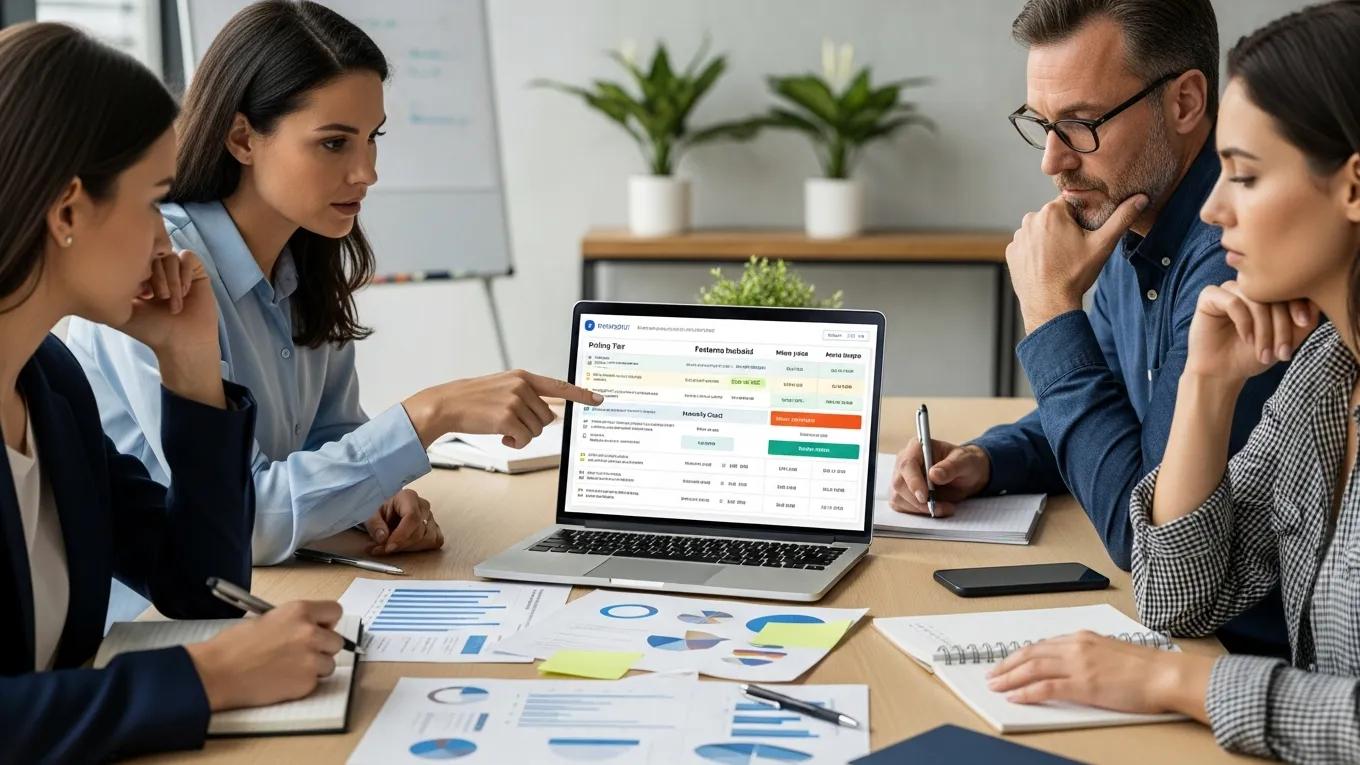
Understanding the pricing models of payroll software is crucial for making an informed decision. Different providers offer various pricing structures, which can significantly affect your overall costs. Common pricing models include flat-rate pricing, per-employee pricing, and tiered pricing models.
Evaluating these pricing models helps businesses understand the cost implications of their payroll software choices. For example, flat-rate pricing may be beneficial for businesses with a stable number of employees, while per-employee pricing can be advantageous for those experiencing growth.
Denali HR offers tailored payroll solutions that simplify complex HR functions, making it easier for small to mid-sized businesses to manage their payroll efficiently. Their services include compliance support and workforce management, ensuring that businesses can focus on growth while maintaining accurate payroll processing.
User Experience
User experience is a critical factor when selecting payroll software, as it directly impacts how efficiently your team can operate the system. Key aspects affecting user experience include ease of use and the availability of training and resources.
- Ease of Use: The software should have an intuitive interface that allows users to navigate easily and perform tasks without extensive training.
- Training and Resources: Comprehensive training materials and customer support can significantly enhance user experience, ensuring that employees can utilize the software effectively.
A positive user experience not only increases productivity but also reduces the likelihood of errors, making it essential to consider these factors during the selection process.
Impact of Automated Accounting Systems on SME Payroll Preparation
This study investigated the impact of automated accounting systems on payroll preparation amongSmall and Medium-sized Enterprises (SMEs) in Port Harcourt. Three research questions guided thestudy, and three null hypotheses were tested at a 0.05 significance level. A descriptive survey designwas employed, with a population of 6,838 registered SMEs in Port Harcourt. A sample of 400 SMEswas selected for the study. Data was collected using a research instrument with a 4-point scale:Very High Extent (VHE-4), High Extent (HE-3), Moderate Extent (ME-2), and Low Extent (LE-1).The instrument’s reliability was confirmed with a Cronbach Alpha coefficient of 0.81.
Influence of Automated Accounting System on Payroll Preparation of Small and Medium Scale Enterprises in Rivers State, WA Amaewhule, 2024
Automated accounting systems have a significant impact on payroll preparation, particularly for Small and Medium-sized Enterprises (SMEs).
Integration Capabilities
The ability of payroll software to integrate with existing systems is another crucial consideration. Effective integration capabilities can streamline processes and enhance data accuracy across various departments.
- Seamless Data Synchronization: Payroll software should allow for easy data transfer between HR systems, accounting software, and other business applications.
- Real-time Updates: Integration with other systems ensures that payroll data is always up-to-date, reducing the risk of discrepancies.
By prioritizing integration capabilities, businesses can create a more cohesive operational environment, ultimately leading to improved efficiency and accuracy in payroll management.
Digital Payroll: Advantages & Implementation Hurdles for Organizations
Payroll management is a very critical organization task, it ensures employees receive payments in a fast and accurate manner. Previously, payroll was manual and time consuming, prone to errors, and not easy to scale up especially in large organizations. Digital technologies have changed the payroll management, with automation and cloud-based payroll management functionalities to be regarded as advantages because of the decrease in human error, enhanced data security, real-time access to data, and the ability to integrate with the human resource (HR) and enterprise resource planning (ERP) systems without disruption.
A Survey of Adoption Challenges and Barriers in Implementing Digital Payroll Management Systems in Across Organizations, RR Kothamaram, 2021
Digital payroll systems offer significant advantages by reducing human error, enhancing data security, and enabling real-time data access and integration with HR and ERP systems.
How Can Payroll Software Integrate with HR Systems for Streamlined Employee Management?
Integrating payroll software with HR systems allows for streamlined employee management by ensuring that all employee data is consistent across platforms. This integration facilitates automatic updates to payroll records when changes occur in HR systems, such as new hires or terminations. As a result, businesses can maintain accurate records and reduce administrative burdens.
Which Integration Capabilities Support Hiring and Onboarding Processes?
Integration capabilities that support hiring and onboarding processes include automated data transfer from applicant tracking systems to payroll software. This feature ensures that new employee information is accurately captured and processed, allowing for a smoother onboarding experience. Additionally, integration with benefits administration systems can help new hires enroll in benefits seamlessly.
How Does Integration Enhance Documentation and Employee Relations?
Effective integration enhances documentation by ensuring that all employee records are centralized and easily accessible. This centralization improves communication and transparency between employees and management, fostering better employee relations. When employees can access their payroll and HR information easily, it leads to increased trust and satisfaction within the organization.
What Are the Top Payroll Providers for Small Businesses in 2026?
As of 2026, several payroll providers stand out for their features and compliance support. These include Denali HR, which specializes in simplifying payroll and HR management for small to mid-sized businesses. Their focus on compliance and workforce management makes them a reliable choice for businesses looking to streamline their payroll processes.
How Do Leading Providers Compare in Features and Compliance Support?
Leading payroll providers typically offer a range of features, including automated payroll processing, compliance management, and employee self-service options. Denali HR, for instance, emphasizes compliance support, ensuring that businesses can navigate complex regulations with ease. Comparing these features helps businesses identify the provider that best meets their specific needs.
What Client Testimonials Highlight Provider Reliability and Expertise?
Client testimonials often highlight the reliability and expertise of payroll providers. Businesses frequently mention the ease of use, customer support, and the ability to stay compliant with regulations as key factors in their satisfaction. These testimonials can provide valuable insights into the strengths and weaknesses of different payroll solutions.
About the Author
This article was reviewed by Josh Henderson, Founder of Denali HR. Denali HR, based in Salt Lake City, Utah, provides payroll services, employee benefits administration, HR support, and risk management solutions for small and mid-sized businesses. Founded in 2019, the company focuses on delivering personalized HR support without the complexity of large PEO providers.