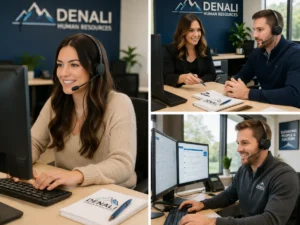

Streamlined Payroll Administration and Compliance for SMBs
By Josh Henderson, Denali HR
Payroll administration services play a crucial role in managing the financial aspects of a business, ensuring that employees are paid accurately and on time while adhering to regulatory requirements. This article delves into the key components of payroll administration services, their benefits, and how outsourcing payroll can enhance efficiency and compliance. Many businesses struggle with the complexities of payroll processing, which can lead to errors and compliance issues. By leveraging specialized payroll services, companies can streamline their operations and focus on core business activities. We will explore the essential elements of payroll administration, the advantages of outsourcing, and how Denali HR can assist in simplifying these processes for small to mid-sized businesses.
Key Components of Payroll Administration Services:
Payroll administration services encompass several critical components that ensure effective management of employee compensation and compliance with tax regulations. Understanding these components is essential for businesses looking to optimize their payroll processes.
Streamlined Payroll Processing:
Streamlined payroll processing involves the use of automated systems that minimize human error and enhance efficiency. By integrating payroll software with time tracking systems, businesses can ensure accurate data collection and processing. This automation not only speeds up payroll cycles but also reduces the administrative burden on HR teams, allowing them to focus on strategic initiatives.
Compliance Support:
Compliance support is a vital aspect of payroll administration services, helping businesses navigate complex tax regulations. Payroll service providers assist in ensuring that all payroll practices adhere to federal, state, and local laws, significantly reducing the risk of penalties. This support is crucial for maintaining a compliant workforce and avoiding costly mistakes that can arise from mismanagement.
Access to Technology:
Access to advanced payroll technology is another key component of payroll administration services. Modern payroll software offers features that automate routine tasks, enhance accuracy, and provide real-time reporting capabilities. This technology not only simplifies payroll management but also empowers businesses with insights that can drive better decision-making.
Modern solutions, like ServiceNow, exemplify how technology can improve payroll management operations by enhancing efficiency, accuracy, and compliance.
ServiceNow for Payroll Management Efficiency & Compliance
In today’s quickly changing business landscape, organizations face increasingly complex issues in conducting payroll operations efficiently and properly. This thesis provides a complete investigation of how ServiceNow, a renowned enterprise service management platform, has helped to improve payroll management operations. This report uses extensive research and analysis to show how ServiceNow’s digital workflows, automation capabilities, and integration features handle traditional payroll concerns while allowing enterprises to achieve unprecedented levels of efficiency, accuracy, and compliance.
ServiceNow’s critical role in payroll management, S Mallireddy, 2024
Expert Guidance:
Expert guidance from payroll professionals is invaluable for businesses seeking to optimize their payroll processes. Payroll service providers offer specialized knowledge in payroll and compliance, helping organizations manage their payroll effectively. This expertise ensures that businesses stay updated on regulatory changes and best practices, further enhancing their operational efficiency.
Benefits of Payroll Administration Services:

Utilizing payroll administration services offers numerous benefits that can significantly impact a business’s overall efficiency and employee satisfaction. Here are some of the key advantages:
- Reduced Administrative Load: Outsourcing payroll allows businesses to offload time-consuming tasks, freeing up resources for more strategic activities.
- Cost Efficiency: By leveraging specialized payroll services, companies can reduce overhead costs associated with maintaining an in-house payroll department.
- Improved Employee Satisfaction: Timely and accurate payroll processing enhances employee trust and satisfaction, contributing to a positive workplace culture.
- Scalability: Payroll services can easily scale with a business as it grows, accommodating changes in workforce size and complexity.
Denali HR specializes in providing tailored payroll administration services that simplify complex payroll functions for small to mid-sized businesses. By partnering with Denali HR, organizations can focus on their core operations while ensuring compliance and efficiency in payroll management.
How Outsourcing Payroll Enhances Efficiency and Compliance:
Outsourcing payroll can significantly enhance a business’s efficiency and compliance by leveraging the expertise of specialized providers. These providers maintain up-to-date knowledge of evolving regulations, ensuring that businesses remain compliant with tax laws and labor regulations. Additionally, outsourcing reduces the likelihood of errors that can occur with in-house payroll processing, leading to more accurate and timely payroll management.
What Are Payroll Processing Services and Their Benefits for Businesses?
Payroll processing services are specialized solutions that manage the entire payroll cycle, from calculating employee wages to filing tax returns. These services offer several benefits, including:
- Efficiency Improvements: Automated payroll systems streamline processes, reducing the time required for payroll preparation.
- Cost Savings: Outsourcing payroll can lower operational costs by eliminating the need for in-house payroll staff and resources.
- Compliance Advantages: Payroll service providers ensure adherence to tax regulations, minimizing the risk of penalties and audits.
Digital technologies, including automation and cloud-based systems, have transformed payroll management by reducing human error, enhancing data security, and providing real-time data access.
Digital Payroll Management: Automation and Cloud Benefits
Payroll management is a very critical organization task, it ensures employees receive payments in a fast and accurate manner. Previously, payroll was manual and time consuming, prone to errors, and not easy to scale up especially in large organizations. Digital technologies have changed the payroll management, with automation and cloud-based payroll management functionalities to be regarded as advantages because of the decrease in human error, enhanced data security, real-time access to data, and the ability to integrate with the human resource (HR) and enterprise resource planning (ERP) systems without disruption.
A Survey of Adoption Challenges and Barriers in Implementing Digital Payroll Management Systems in Across Organizations, RR Kothamaram, 2021
How Does Payroll Processing Ensure Accurate Employee Wage Management?
Accurate employee wage management is achieved through a systematic approach to payroll processing. This involves:
- Collecting Employee Data: Gathering accurate information regarding hours worked, salary rates, and deductions.
- Calculating Payroll: Utilizing software to compute wages based on collected data, ensuring precision in calculations.
- Distributing Payments: Facilitating timely payment to employees through direct deposit or checks, enhancing employee satisfaction.
What Advantages Do Outsourced Payroll Solutions Offer to Small and Growing Businesses?
Outsourced payroll solutions provide several advantages tailored to the needs of small and growing businesses:
- Cost Savings: Reducing the need for in-house payroll staff can lead to significant savings.
- Efficiency Improvements: Streamlined processes allow businesses to focus on growth rather than administrative tasks.
- Access to Expertise: Outsourcing provides access to payroll professionals who can offer guidance and support.
How Do Payroll Compliance Services Reduce Risk and Ensure Regulatory Adherence?

Payroll compliance services play a critical role in reducing risk and ensuring that businesses adhere to regulatory requirements. These services include:
- Compliance Monitoring: Regular audits and checks to ensure that payroll practices align with current laws.
- Accurate Payroll Processing: Ensuring that all calculations and filings are correct, minimizing the risk of errors that could lead to penalties.
Which Payroll Tax Filing and Reporting Requirements Must Businesses Follow?
Businesses must adhere to various payroll tax filing and reporting requirements, including:
- Quarterly Tax Filings: Submitting payroll taxes on a quarterly basis to federal and state authorities.
- Annual Reporting: Providing year-end reports, suchs as W-2s and 1099s, to employees and the IRS.
How Does Denali HR Support Payroll Compliance and Risk Management?
Denali HR supports payroll compliance and risk management by offering comprehensive payroll services that include:
- Compliance Monitoring: Regular updates and audits to ensure adherence to changing regulations.
- Accurate Payroll Processing: Utilizing advanced technology to ensure precise calculations and timely filings.
What Are Best Practices for Employee Payroll Management in Integrated HR Systems?
Implementing best practices for employee payroll management within integrated HR systems can enhance efficiency and accuracy. Key practices include:
- Seamless Integration: Ensuring that payroll systems are integrated with HR and time tracking systems for accurate data flow.
- Automated Payroll Processing: Utilizing technology to automate routine payroll tasks, reducing the risk of human error.
How Does Payroll Integration Enhance Hiring, Onboarding, and Employee Relations?
Payroll integration plays a significant role in enhancing hiring, onboarding, and employee relations by:
- Streamlined Onboarding Processes: Automating payroll setup for new hires, ensuring timely payment from day one.
- Improved Employee Experience: Providing a seamless transition into the payroll system enhances overall employee satisfaction.
What Technologies Support Efficient Employee Payroll Management?
Several technologies support efficient employee payroll management, including:
- Automated Payroll Software: Streamlines payroll processing and reduces manual errors.
- Time Tracking Solutions: Integrates with payroll systems to ensure accurate data collection.
How Can Payroll Reporting and Analytics Improve Business Decision-Making?
Payroll reporting and analytics provide valuable insights that can improve business decision-making by:
- Data-Driven Insights: Offering analytics on payroll expenses and trends to inform budgeting and forecasting.
- Performance Metrics: Tracking key payroll metrics to assess efficiency and identify areas for improvement.
Which Payroll Metrics Are Essential for Compliance and Financial Planning?
Essential payroll metrics for compliance and financial planning include:
- Payroll Accuracy Rate: Measures the percentage of accurate payroll calculations.
- Processing Time: Tracks the time taken to complete payroll processing, highlighting efficiency.
How Do Payroll Analytics Support Scalable Workforce Management?
Payroll analytics support scalable workforce management by providing insights that help businesses adapt to changing workforce needs. This includes:
- Data-Driven Insights: Utilizing payroll data to inform staffing decisions and resource allocation.
- Cost Management: Analyzing payroll expenses to identify opportunities for cost savings.
What Are Transparent Pricing Models and Service Packages for Payroll Administration?
Transparent pricing models and service packages for payroll administration ensure that businesses understand the costs associated with payroll services. Key features include:
- Clear Fee Structures: Outlining all costs associated with payroll services to avoid hidden fees.
- Service Packages: Offering tiered service options to cater to different business sizes and needs.
How Do Different Payroll Service Tiers Cater to Small and Sizable Businesses?
Different payroll service tiers cater to small and sizable businesses by providing tailored solutions that meet varying needs. This includes:
- Cost Structure: Offering pricing models that align with the budget of small businesses while providing comprehensive services for larger organizations.
- Essential Features: Ensuring that each tier includes the necessary features to support effective payroll management.
What Should Businesses Consider When Choosing a Payroll Service Provider?
When selecting a payroll service provider, businesses should consider several factors:
- Cost Structure: Understanding the pricing model and ensuring it fits within the budget.
- Customer Support: Evaluating the level of support offered by the provider to address any issues that may arise.
About the Author
This article was reviewed by Josh Henderson, Founder of Denali HR. Denali HR, based in Salt Lake City, Utah, provides payroll services, employee benefits administration, HR support, and risk management solutions for small and mid-sized businesses. Founded in 2019, the company focuses on delivering personalized HR support without the complexity of large PEO providers.