

Mastering Multi-State Payroll: A Guide to Compliance and Efficiency
By Josh Henderson, Denali HR
Managing payroll across multiple states presents significant administrative and regulatory challenges. States maintain distinct payroll tax rules, creating potential compliance risks for employers. This guide clarifies essential payroll obligations, filing deadlines, and practical best practices so companies can maintain compliance and operate more efficiently. It addresses state payroll tax requirements, filing schedules, compliance measures, and how automation and outsourcing can strengthen payroll management.
Multi-state payroll compliance presents substantial challenges that require structured, strategic responses.
Multi-State Payroll Compliance Challenges & Strategic Responses
This analysis examines the multifaceted nature of multi-state payroll compliance, identifies core challenges, and recommends strategic responses. It emphasises the value of integrated payroll systems and continuous monitoring to maintain adherence to diverse state regulations and to reduce legal and financial risk.
Multi-State Payroll Compliance: Challenges for US Non-Profit Organizations, 2024
What Are the Essential State Payroll Tax Requirements for Multi-State Businesses?
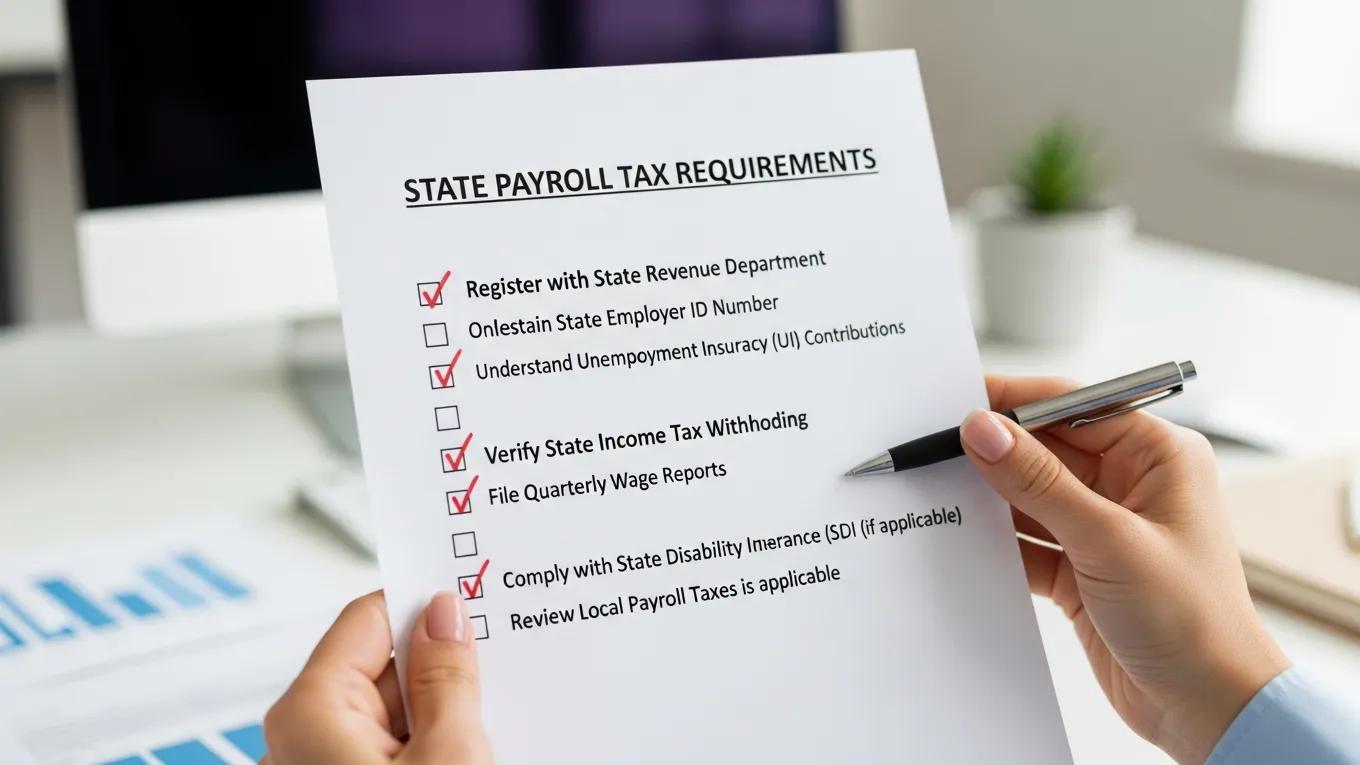
Businesses operating in multiple states must comply with differing payroll tax requirements. Each state prescribes specific registrations, withholding rules, and filing procedures that employers must follow. Failure to comply can result in fines, back taxes, and other financial penalties, so organisations should monitor obligations closely and implement controls to maintain compliance.
How Do State Payroll Tax Registration Processes Vary Across Jurisdictions?
States vary in when and how employers must register for payroll taxes. Some require registration before hiring, while others permit registration after employment begins. Deadlines, documentation requirements, and administrative procedures differ and can affect when payroll may commence. For example, California enforces more stringent registration requirements than some other states. Recognising these differences supports timely registration and efficient payroll setup.
What Are the Key Employee Payroll Tax Withholding Rules by State?
Withholding requirements are set at the state level and can materially affect employee net pay. Jurisdictions determine their own withholding rates and rules. For example, New York applies progressive income tax rates, whereas Florida does not impose a state income tax. Employers must apply the correct withholding rules for each jurisdiction to ensure accurate deductions and to avoid penalties or employee disputes.
How to Navigate Payroll Tax Filing Deadlines and Compliance Across Multiple States?
Managing filing deadlines across multiple states requires disciplined planning and reliable tracking. Deadlines vary by tax type and payroll frequency, so businesses should maintain a centralised calendar and repeatable processes to prevent late filings and associated penalties.
What Are the Critical Payroll Tax Filing Deadlines by State?
Below is a summary of critical payroll tax filing deadlines by state:
Adhering to these deadlines helps avoid penalties and maintain regulatory compliance.
How Can Businesses Mitigate Risks of Payroll Tax Penalties and Non-Compliance?
Businesses can reduce penalty exposure by partnering with Professional Employer Organizations (PEOs) experienced in multi-state compliance, standardising payroll procedures across jurisdictions, and implementing continuous compliance monitoring. These proactive measures lower the risk of audits and fines while supporting dependable payroll operations.
Partnering with specialist providers such as PEOs is an effective approach for managing multi-state payroll tax and compliance complexity.
PEOs for Multi-State Payroll Tax & Compliance
Operating in multiple states complicates payroll taxes, workers’ compensation, ACA requirements, and other compliance obligations. Overlooking details can result in substantial fines or litigation. PEOs specialise in compliance; their multi-state expertise helps ensure regulatory requirements are met and reduces exposure to penalties, audits, and legal risk.
Multi-State Law Firm Considers PEO Partnership
What Best Practices Ensure Effective Multi-State Payroll Tax Compliance?
Adopting recognised best practices is essential for effective multi-state payroll compliance. These measures help standardise processes, reduce errors, and ensure consistent application of state rules across the organisation.
How Does Employee Classification Impact Multi-State Payroll Compliance?
Correct employee classification is central to payroll compliance. Misclassifying workers as independent contractors can lead to significant tax liabilities and penalties. Employers should apply state and federal classification criteria, conduct regular reviews, and provide training to reduce classification errors and associated liabilities.
What Role Does State Unemployment Insurance Compliance Play in Payroll Management?
State unemployment insurance (SUI) requirements vary and are a core element of payroll management. Accurate payroll calculations, timely contributions, and comprehensive recordkeeping are necessary to meet SUI obligations. Regular review of state SUI rules helps ensure ongoing compliance.
How Can Automation and Outsourced Services Enhance Multi-State Payroll Management?
Automation and outsourced services can materially improve multi-state payroll management by enhancing accuracy, efficiency, and regulatory adherence. These solutions reduce manual tasks and lower the likelihood of filing errors.
What Are the Benefits of Multi-State Payroll Software and Automation?

Multi-state payroll software delivers practical benefits:
- Increased Efficiency: Automating payroll processes reduces manual entry and minimizes errors.
- Enhanced Compliance: Software can automatically update tax rates and regulations, ensuring businesses remain compliant with state laws.
- Scalability of Services: As businesses grow, payroll software can easily adapt to changing needs without significant additional investment.
Together, these benefits make payroll software a core component of multi-state payroll operations.
Research indicates that modern payroll solutions with automated compliance features reduce manual errors and regulatory risk compared with legacy systems.
Automated Compliance for Multi-State Payroll Systems
Research shows organisations that operate multi-state payroll must navigate complex regulatory environments. Modern payroll solutions, through automated compliance features, reduce manual errors and help ensure adherence to state-specific regulations.
Enterprise Payroll Transformation: Implementing Workday Payroll for Legacy St. Jude Medical Employees at Abbott’s Medical Devices Division., 2025
How Do Outsourced Payroll Services Support Compliance and Efficiency?
Outsourced payroll providers deliver specialised support for accurate payroll processing, timely tax filings, and compliance with state regulations. Leveraging their expertise allows businesses to concentrate on core activities while maintaining reliable and compliant payroll operations.
Where Can Businesses Find State-Specific Payroll Tax Resources and Support?
Accessing reliable state-specific payroll resources is essential for compliance. State agencies and industry organisations offer guidance, forms, and tools to support employers in meeting their obligations.
Which State Agencies Govern Payroll Tax Registration and Compliance?
State agencies administer payroll tax registration and compliance and provide guidance to employers. Key agencies include:
- California Employment Development Department (EDD): Oversees payroll tax registration and compliance in California.
- New York State Department of Taxation and Finance: Manages payroll tax regulations in New York.
- Texas Workforce Commission: Responsible for payroll tax compliance in Texas.
Recognising each agency’s role helps businesses obtain the appropriate resources and meet obligations efficiently.
How Does Denali HR Provide Expert Guidance on Multi-State Payroll Compliance?
Denali HR provides end-to-end payroll support and compliance management for employers with operations in multiple states. Services include employee onboarding, documentation management, and continuous compliance monitoring. Partnering with Denali HR enables businesses to meet payroll obligations while concentrating on core operations.
Frequently Asked Questions
What are the consequences of non-compliance with multi-state payroll regulations?
Non-compliance can result in substantial fines, assessed back taxes, and potential legal action. States enforce payroll rules through audits and penalties that vary in severity. Non-compliance may also harm reputation and employee trust, increasing turnover. To reduce these risks, businesses should prioritise understanding and adhering to each state’s payroll requirements.
How can businesses stay updated on changing payroll tax laws across states?
Businesses can stay informed by subscribing to state tax agency updates, joining industry associations, and using payroll software that automatically updates tax rates and regulations. Workshops and webinars provide practical guidance. Engaging a PEO or other payroll specialists can also help organisations navigate regulatory changes effectively.
What role does employee training play in ensuring payroll compliance?
Employee training is essential to maintain payroll compliance. Regular training helps staff understand classification rules, withholding procedures, and state-specific requirements. Well-informed employees reduce errors and support a culture of compliance. Ongoing training also aids adaptation to regulatory changes and process updates.
How can businesses effectively manage payroll for remote employees in different states?
Managing payroll for remote employees requires accurate knowledge of each state’s payroll tax rules and a centralised payroll system that handles multiple jurisdictions. Automating tax calculations, maintaining precise records of employee locations and hours, and consulting payroll experts or outsourced providers all support accurate, compliant payroll for remote staff.
What are the benefits of using a Professional Employer Organization (PEO) for payroll management?
A PEO offers expertise in complex payroll regulations, tax filings, and compliance across states. PEOs streamline payroll administration, reduce administrative burden, and can provide employee benefits that support recruitment and retention. Partnering with a PEO allows businesses to focus on core priorities while ensuring payroll is managed accurately and efficiently.
How does technology impact multi-state payroll management?
Technology automates payroll tasks, reduces calculation errors, and supports compliance by updating tax rates and regulations. It provides real-time data for decision-making and reporting. Cloud-based solutions enable payroll administration from any location, which is particularly useful for organisations with remote or distributed workforces. Overall, technology increases efficiency and lowers compliance risk.
About the Author
This article was reviewed by Josh Henderson, Founder of Denali HR. Denali HR, based in Salt Lake City, Utah, provides payroll services, employee benefits administration, HR support, and risk management solutions for small and mid-sized businesses. Founded in 2019, the company focuses on delivering personalized HR support without the complexity of large PEO providers.