

Comprehensive Payroll Tax Compliance and Filing Guide for Small Businesses in 2026
By Josh Henderson, Denali HR
Payroll tax compliance presents significant administrative and regulatory complexity for small businesses. This guide clarifies obligations and offers practical steps to maintain compliance and reduce exposure to penalties. It outlines key deadlines for 2026, the online filing workflow, a compliance checklist, potential penalties, and how outsourcing can lower risk. The objective is to give business owners a clear framework and the tools needed to streamline payroll tax processes.
What Are the Key Payroll Tax Deadlines for 2026?
Awareness of payroll tax deadlines is essential to avoid fines and interest. In 2026, employers must comply with both federal and state schedules, which may differ. Failure to meet these deadlines can result in financial penalties and greater oversight from tax authorities.
How Do Federal and State Payroll Tax Deadlines Differ?
Federal payroll tax deadlines are set by the IRS and apply uniformly across jurisdictions for the required filings. State deadlines vary by jurisdiction and may impose different filing dates and rules. For example, while federal income tax returns are typically due on April 15, some states maintain different deadlines for their income tax filings. Careful tracking of both federal and state requirements is necessary to ensure full compliance.
What Tools Help Track Payroll Tax Deposit Schedules?
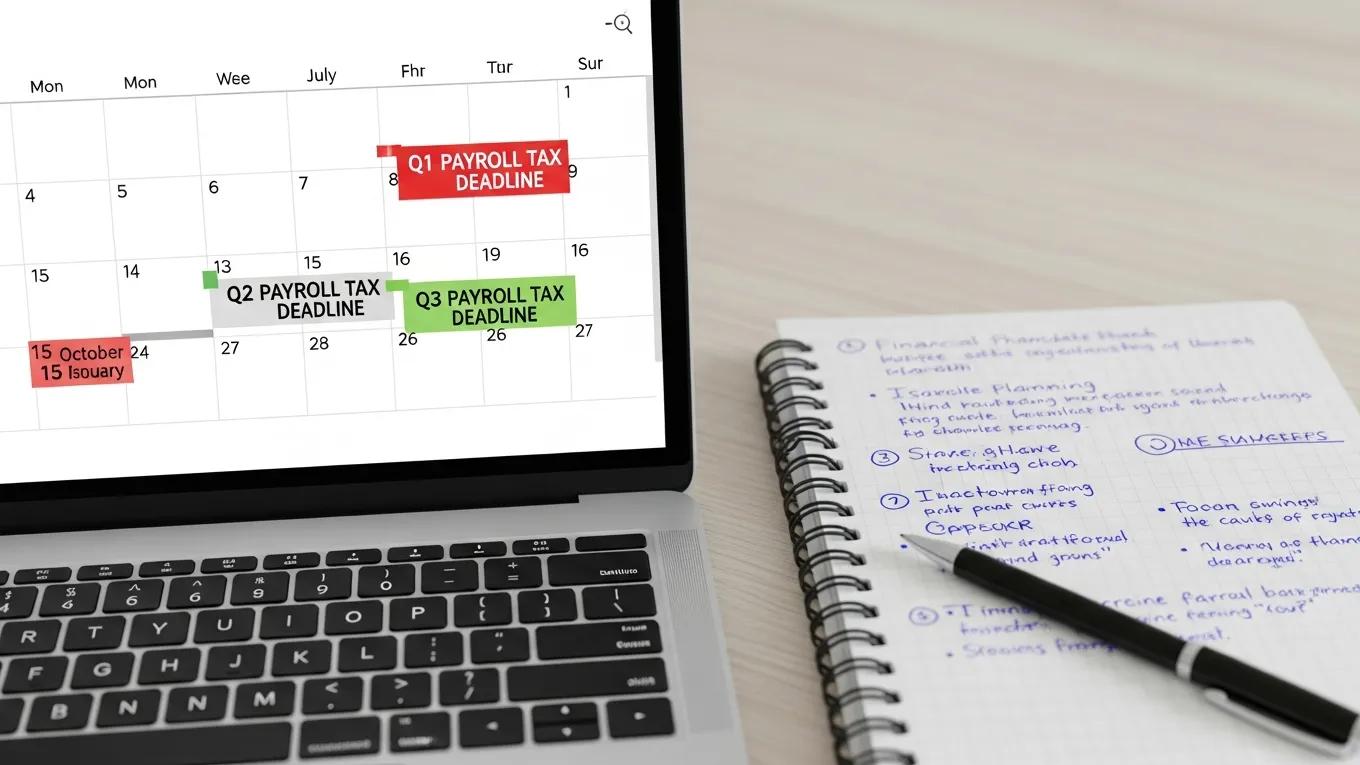
Several tools support accurate tracking of payroll tax deposits. Modern payroll software commonly calculates deposit dates automatically and issues reminders. Online calendars and dedicated tax compliance applications also help maintain organization and reduce the chance of missed deadlines.
How to File Payroll Taxes Online: Step-by-Step Process for Small Businesses
Online filing provides faster submission and often immediate confirmation of receipt. Many systems streamline data entry and reduce processing time compared with manual filing.
Which Payroll Tax Forms Are Required for Online Filing?
Key federal forms for online payroll filing include IRS Form 941 for quarterly employment taxes and Form 940 for annual federal unemployment tax. State-specific forms may also be required depending on the business location. Accurate completion of all applicable forms is critical to maintain compliance.
What Are Best Practices for Accurate and Timely Online Payroll Tax Filing?
Adopt procedures that support accurate and timely filing. Maintain organized employee records, review tax rules regularly for any updates, and use reliable payroll software to automate calculations and reduce errors.
What Does a Payroll Tax Compliance Checklist Include for Small Businesses?
A payroll tax compliance checklist helps ensure all obligations are met. Typical items include verifying correct employee classifications, confirming accurate payroll calculations, and scheduling timely tax deposits.
How to Integrate Payroll Tax Compliance with Broader HR Management?
Integrate payroll compliance into HR operations by aligning processes and systems. Provide regular training for HR staff on regulatory changes and use integrated solutions that combine payroll and HR functions. Close coordination between payroll and HR teams improves accuracy and operational efficiency.
What Are Common Compliance Pitfalls and How to Avoid Them?
Common pitfalls include employee misclassification, incomplete recordkeeping, and missed deadlines. Prevent these issues through periodic audits of payroll procedures, ongoing staff training, and consultation with payroll specialists to identify and mitigate risks.
What Are Payroll Tax Penalties and Fines and How Can They Be Avoided?
Penalties typically result from late filings, inaccurate reporting, or failure to remit required taxes. Understanding the triggers for penalties allows businesses to adopt controls that reduce exposure.
What Are the Consequences of Missing Payroll Tax Deadlines?
Missing deadlines can incur penalties and interest on outstanding taxes and may prompt increased scrutiny or audits by tax authorities. Maintaining a calendar of due dates and using tracking tools helps mitigate these consequences.
How Does Outsourcing Payroll Compliance Reduce Risk?

Outsourcing payroll compliance transfers responsibility to providers with specialised knowledge of tax rules and filing requirements. This reduces the likelihood of errors and missed deadlines and frees internal resources to focus on core business activities.
How Can Denali HR Support Your Payroll Tax Compliance and Filing Needs?
Denali HR delivers tailored payroll tax compliance and filing support for small and mid-sized businesses. With experience in HR outsourcing and compliance, Denali HR assists with accurate payroll processing and adherence to tax regulations, thereby reducing administrative burden on internal teams.
What Are the Benefits of Outsourced Payroll and Compliance Services?
Outsourced payroll and compliance services deliver measurable benefits: potential cost savings, greater operational efficiency, and lower compliance risk. Access to specialised expertise and resources supplements in-house capabilities where needed.
How Does Denali HR Ensure Scalable and Reliable Payroll Tax Management?
Denali HR utilises advanced payroll management systems that scale with business growth. These systems support consistent, accurate payroll processing and adapt to regulatory changes without compromising compliance, enabling businesses to concentrate on growth with confidence in payroll operations.
Frequently Asked Questions
What are the key differences between federal and state payroll tax regulations?
Federal payroll tax regulations are administered by the IRS and apply uniformly at the federal level, while state regulations differ by jurisdiction. Each state sets its own tax laws, rates, and filing deadlines, which can increase complexity for employers. Business owners should consult state tax websites or a tax professional to confirm local requirements.
How can small businesses prepare for potential payroll tax audits?
Preparation for a payroll tax audit requires thorough documentation and organized records of payroll activity. Regular reviews of payroll processes, verification of employee classifications and withholdings, and periodic internal audits help detect discrepancies early. Engaging a tax professional can provide additional guidance and reduce audit risk.
What role does employee classification play in payroll tax compliance?
Employee classification determines tax withholding, reporting obligations, and employer liabilities. Misclassifying workers as independent contractors can lead to penalties and unpaid taxes. Businesses should apply IRS guidance on control and the nature of the working relationship and maintain regular training on classification standards.
What are the advantages of using payroll software for compliance?
Payroll software automates calculations, issues reminders for deadlines, and supports accurate reporting. These features reduce manual errors, streamline filing, and help ensure correct completion of required forms. Many solutions also provide regulatory updates, which aids ongoing compliance and saves administrative time.
How can small businesses stay updated on payroll tax law changes?
Businesses can stay informed by subscribing to IRS and state tax agency newsletters, following authoritative industry blogs, and attending webinars or workshops on payroll and tax compliance. Membership in professional organisations and regular consultation with tax advisors also provide valuable, timely insights.
What should small businesses do if they discover a payroll tax error?
When an error is discovered, correct the payroll records promptly and retain documentation of the correction. File any required amended returns with the IRS and state tax authorities and, where appropriate, consult a tax professional to assess potential penalties and determine the appropriate remedial actions.
About the Author This article was reviewed by Josh Henderson, Founder of Denali HR. Denali HR, based in Salt Lake City, Utah, provides payroll services, employee benefits administration, HR support, and risk management solutions for small and mid-sized businesses. Founded in 2019, the company focuses on delivering personalized HR support without the complexity of large PEO providers.
About the Author
This article was reviewed by Josh Henderson, Founder of Denali HR. Denali HR, based in Salt Lake City, Utah, provides payroll services, employee benefits administration, HR support, and risk management solutions for small and mid-sized businesses. Founded in 2019, the company focuses on delivering personalized HR support without the complexity of large PEO providers.